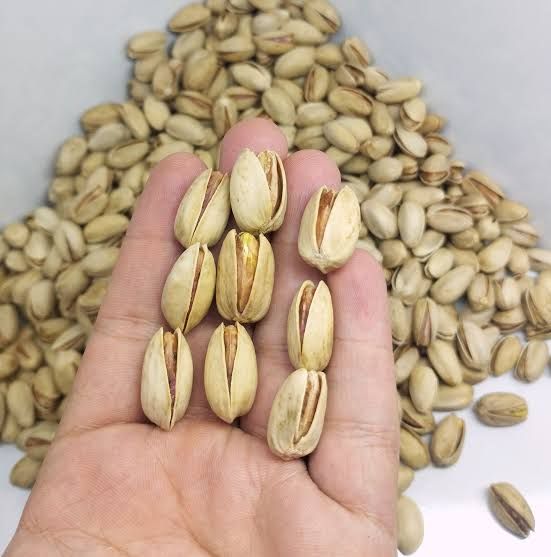
When international buyers request pistachios, one of the first questions a supplier needs to answer is size. In the pistachio trade, size is expressed as a "count" — and understanding what that number means is one of the most useful things a buyer can learn before requesting a quote.
What "Pistachio Size" or "Count" Actually Means
Pistachio size is not measured in millimeters the way some products are. Instead, the trade uses count — the number of pistachios it takes to make up one standard unit of weight, most commonly one ounce. A smaller count number means fewer, larger pistachios fill that ounce; a larger count number means more, smaller pistachios are needed to reach the same weight.
What Is an "Ons" (Ounce) of Pistachios?
In pistachio trading terminology — including terms used across Middle Eastern and Iranian markets — "ons" refers to the ounce, the reference unit used to express count. One ounce is approximately 28.35 grams. Counting how many whole pistachios fit into that reference weight is how a size grade is assigned.
How Count Is Determined
To determine count, a representative sample of in-shell pistachios is weighed out to one ounce (or a multiple of it, for accuracy), and the number of individual nuts in that sample is counted. The result is expressed as a count number, or as a range such as 20/22, meaning that weight contains somewhere between 20 and 22 pistachios.
Common Size Ranges in the Trade
Typical count ranges seen in Iranian pistachio trade include:
- 18/20 — very large nuts, fewer per ounce, generally positioned as a premium size.
- 20/22 — large, widely requested for retail and gifting formats.
- 22/24 — a common mid-large size used across both retail and food service.
- 24/26 and smaller — mid-size counts often used for processing, confectionery and bulk applications.
Smaller count numbers (like 18/20) indicate larger nuts, since fewer of them are needed to reach one ounce. Larger count numbers indicate smaller nuts, since more are needed to reach the same weight.
How Size Affects Price and Target Market
Larger pistachios (lower count) are generally priced higher, since fewer nuts are needed for the same visual volume and they are often preferred for retail packaging, gifting and premium snacking. Smaller counts are frequently more cost-effective for buyers focused on processing, ingredient use, or price-sensitive markets. Choosing the right count is therefore as much a commercial decision as a quality one — it should match how the buyer's end market actually uses the product.
Quality Factors Beyond Size
Count describes size, but it is only one part of overall quality. Buyers typically also evaluate:
- Split rate (open-mouth percentage) — the share of shells that opened naturally during growth.
- Kernel color — a bright, even green kernel color is generally associated with higher visual quality.
- Kernel percentage — the proportion of edible kernel relative to total in-shell weight.
- Freshness and moisture — properly dried, fresh-crop pistachios perform better in storage and shipping.
- Damage and defects — discoloration, insect damage, or shell breakage are assessed and graded out where required.
Final Specifications Are Buyer- and Market-Specific
The right combination of count, split rate and quality grade depends on the buyer's destination market, application and budget. Nuterra Nuts confirms exact size availability, current grade and applicable documentation once we understand what a specific order requires.
Request a Quote for Pistachios